Digital Evaluation Systems: 9 Key Benefits & Smart Implementation Strategies for Universities

For students, an examination may end the moment the answer booklet is submitted. For universities and examination boards, however, some of the most demanding work is only beginning. Thousands—or even lakhs—of answer booklets may still need to be collected, transported, identified, scanned, allocated to evaluators, marked, moderated, verified and converted into final results. When these...
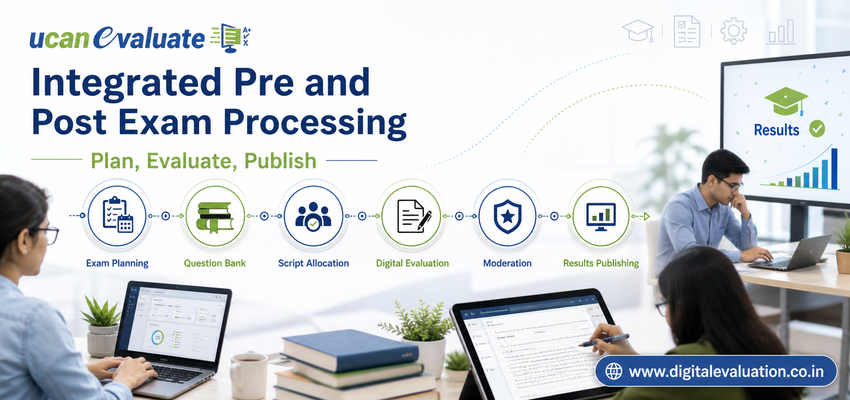
From Registration to Results: How Integrated Pre & Post Exam Processing Enhances Online Assessment

For students, an examination may begin when the question paper appears on screen and end when they submit their responses. For a university, however, the assessment journey begins much earlier and continues long after the final answer is submitted. Student data must be prepared. Subjects need to be mapped. Question papers must be created and...

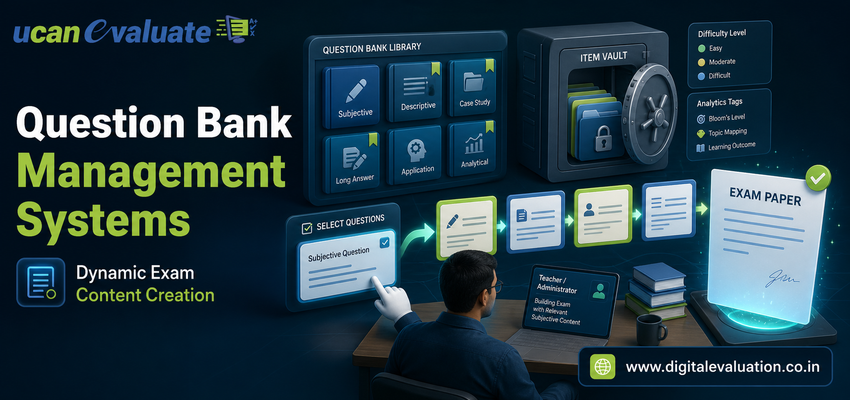
Question Bank Management System: 9 Ways to Build Smarter Exams

Creating a university examination paper should not begin with faculty searching through old Word files, spreadsheets, email attachments or folders of previously used questions. As universities manage more programmes, subjects, semesters and examination patterns, question-paper creation becomes a complex academic workflow. Questions must be relevant to the syllabus, balanced by difficulty, aligned with learning outcomes,...

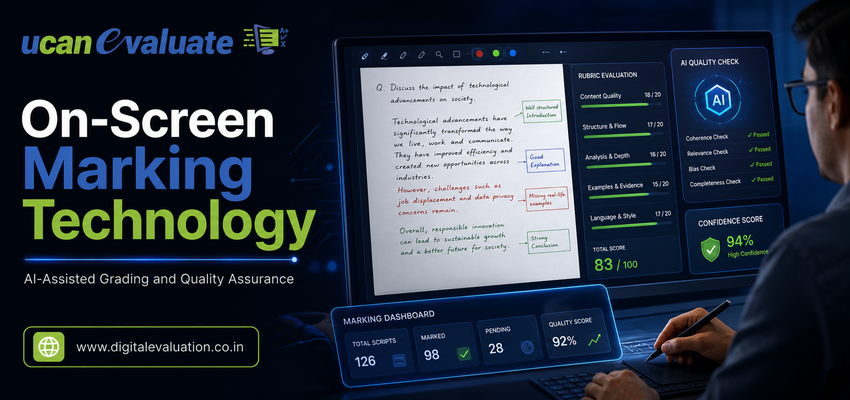
On-Screen Marking with AI: Smarter Grading, Stronger QA

A university can digitize thousands of answer sheets, allocate them to evaluators and complete marking faster than before. But one important question still remains: How do you make sure evaluation quality stays consistent across different evaluators, subjects, locations and examination cycles? This is where AI-assisted On-Screen Marking can add a new layer of intelligence to...

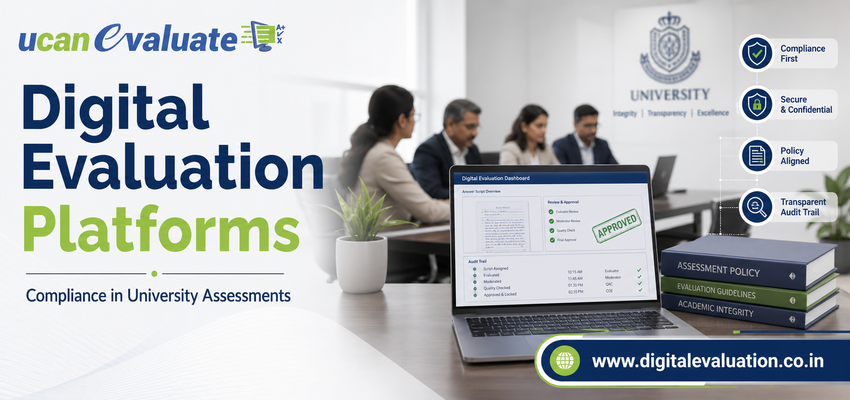
9 Ways Digital Evaluation Platforms Strengthen Compliance in University Assessments

For a university, examination compliance is not limited to conducting an exam on schedule. It extends across the complete assessment journey—from question preparation and candidate records to answer-script handling, evaluator allocation, marking, moderation, result processing, re-evaluation and audit readiness. When these activities depend heavily on physical answer booklets, spreadsheets, emails and disconnected systems, proving that...

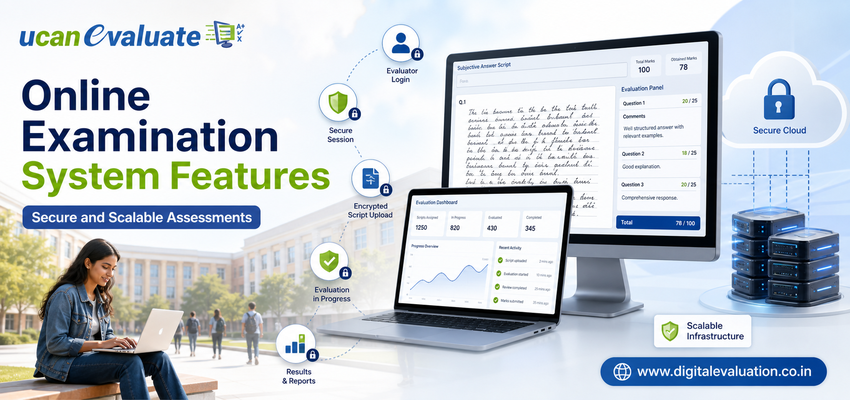
Online Examination System: 12 Must-Have Features for Secure, Scalable Assessments

An examination system may work perfectly for 200 students and still struggle when 20,000 candidates log in together. That is why universities and examination bodies evaluating an Online Examination System need to look beyond a simple test-taking interface. A modern system must protect examination content, authenticate candidates, manage large concurrent volumes, handle different question formats,...

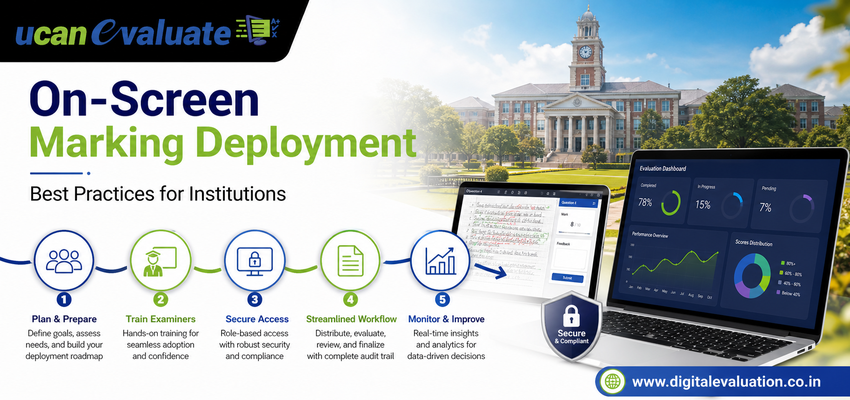
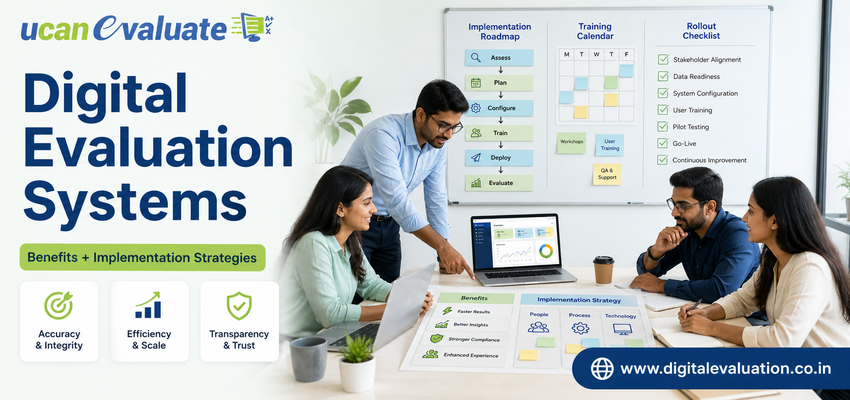
Deploying an On-Screen Marking System? 10 Best Practices Every Educational Institution Should Follow

Moving from physical answer-script evaluation to digital marking can dramatically change how an institution manages examinations. But successful deployment is not simply about giving evaluators scanned answer sheets on a computer screen. A well-planned On Screen Marking System must connect scanning, evaluator allocation, security, monitoring, moderation, marks validation and result processing into one controlled examination...

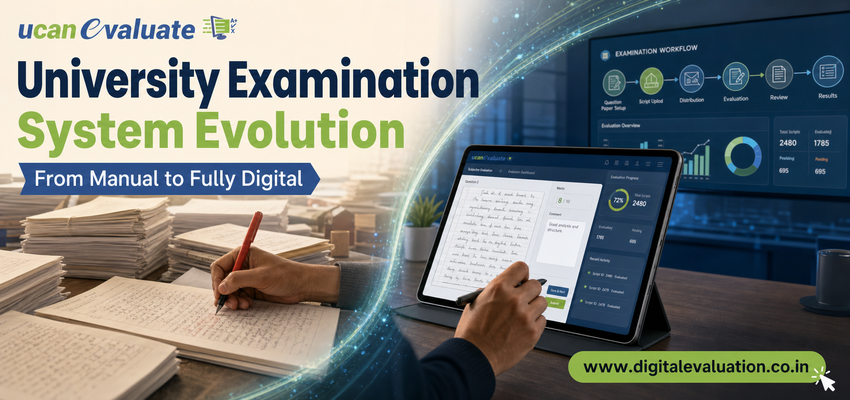
How a Fully Digital University Examination System Is Transforming Assessment in 2026

For decades, a typical University Examination System depended on an enormous amount of paperwork. Question papers were prepared manually. Examination forms moved between departments. Answer booklets travelled physically from examination centres to evaluation locations. Examiners marked scripts using pens, marks were entered manually, totals were checked repeatedly, and result processing involved multiple administrative teams. The...

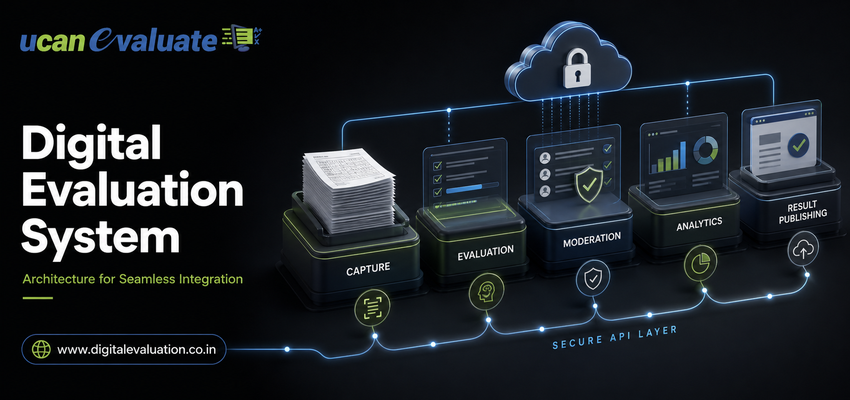
Digital Evaluation System Architecture: 10 Core Components Universities Need for Seamless Integration

A Digital Evaluation System may look simple from the evaluator’s screen. An examiner logs in, opens a digitised answer booklet, checks responses, enters marks and submits the evaluation. But behind that seemingly simple experience lies a much larger technology ecosystem. Answer scripts must first be scanned accurately. Each booklet must be identified correctly. Digital files...

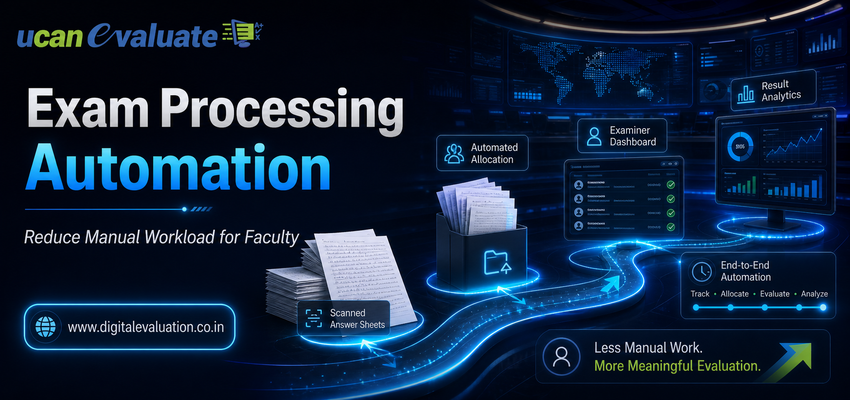
Examination Processing Automation: 9 Ways Universities Can Reduce Faculty Workload and Deliver Faster Results

An examination may last only a few hours for a student. For faculty members and examination teams, however, the work can begin weeks before exam day and continue long after the last answer booklet has been submitted. Student records need verification. Questions must be prepared and approved. Examination schedules have to be coordinated. Answer scripts...

Learning Spiral Ltd.Digital Evaluation
Our innovative software solution automates manual evaluation of subjective answers to minimize the cost, time, effort and human errors in the valuation process.
OUR LOCATIONSWhere to find us
https://digitalevaluation.co.in/wp-content/uploads/2023/12/img-footer-map-2.jpg
GET IN TOUCHLearning Spiral's Social links
Taking seamless key performance indicators offline to maximise the long tail.
Learning Spital Pvt. Ltd.Digital Evaluation
Our innovative software solution automates manual evaluation of subjective answers to minimize the cost, time, effort and human errors in the valuation process.
OUR LOCATIONSWhere to find us
https://digitalevaluation.co.in/wp-content/uploads/2023/12/img-footer-map-2.jpg
GET IN TOUCHLearning Spiral's Social links
Taking seamless key performance indicators offline to maximise the long tail.

Copyright by Learning Spiral Ltd. All rights reserved.